
Protecting Your Home From Wind Damage: 5 Ways To Get Storm-Ready
Remodeling and Renovation Tips

TL;DR: Protecting Your Home From Wind Damage
|
Hurricanes may be seasonal, but protecting your home from wind damage is a year-round job. NOAA’s updated August 2026 hurricane outlook calls for a 75 percent chance of below-normal activity, with seven to 13 named storms, two to six hurricanes, and up to two major hurricanes. Still, a quieter season overall doesn’t guarantee anything; after all, there’s no way to predict where exactly those two major storms may hit. That makes hurricane preparedness essential — no matter the outlook. From securing windows to clearing the yard, preparing for a storm before it heads your way can help reduce the risk of wind damage and give you more time to focus on your family’s safety.
5 Steps To Protect Your Home From Wind Damage
The best time to think about protecting your home is well before the wind starts kicking up. Some improvements might require a contractor, but others can become part of your annual maintenance routine.
“You have to protect your house all the way around,” said Duane Talaski, a longtime Florida homeowner with more than 15 years of experience weathering all types of storms. “Storm prevention should be an ongoing thing.”
Start with these five steps for reducing wind damage and preparing for a hurricane.
1. Secure Windows and Doors To Reduce Wind Damage
Securing windows and doors is essential for protecting your home from hurricane damage. The openings are vulnerable to both wind pressure and flying debris.
“Believe it or not,” said Talaski, “high winds are especially hard on doors. If a door isn’t the right material or installed correctly, the wind can pull it open and wreak havoc around the home’s interior.”
Use Impact-Resistant Glass or Storm Shutters
After the devastation of Hurricane Andrew in 1992, the state of Florida instituted stringent safety requirements that home builders must follow to improve wind resistance and mitigate wind damage. The building codes focus on structural strength, materials, and design features, with specifics based on your local regulations and your home’s design.
Impact-resistant windows provide built-in protection, so there’s nothing to install if a storm’s on the way. Another option is storm shutters — either permanent accordion-style or removable panels you’ll need to secure in time to prevent wind damage.
Plywood is a good fallback. The National Weather Service recommends stocking up before a storm threatens rather than waiting until supplies are scarce. And despite the taped-up windows you may see on houses and businesses, never rely on tape. It does not protect glass sufficiently from wind or debris.
Don’t Forget the Garage Door
Because of their size, garage doors can be especially vulnerable to high winds. FEMA recommends reinforcing doors with metal braces or a vertical storm bar, which extends from the floor to the top edge of the door. The bar helps prevent the door from caving inward or being blown out in heavy winds.
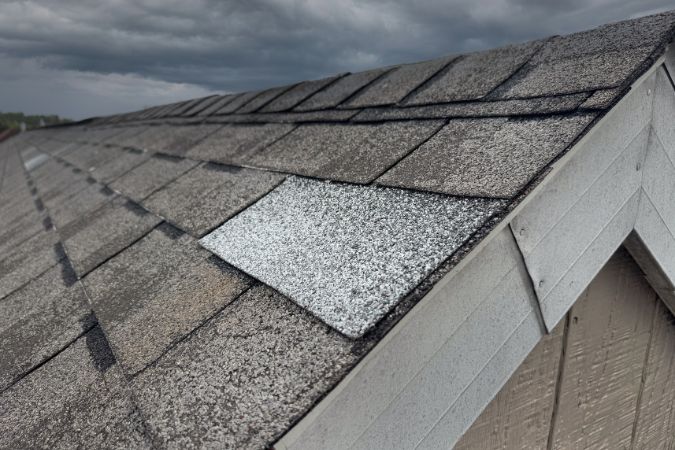
Repairing loose or damaged shingles before severe weather arrives is an important part of protecting your home from wind damage.
2. Reinforce the Roof To Help Prevent Wind Damage
Your roof is another critical part of protecting your home. Strong winds create uplift forces that can loosen coverings, damage roof decking, or pull the roof framing away from the walls. Here are a few ways to reinforce your roof:
Strengthen the Roof-to-Wall Connection
FEMA names the roof-to-wall connection as a common point of failure during storms. Hurricane clips or straps create a stronger connection between roof framing and exterior walls, helping to resist the upward force of wind that can lift the roof off the house. Particularly for older homes in high-wind areas, the National Association of Home Builders (NAHB) recommends having the roof-to-wall connection evaluated.
Repair Loose or Damaged Roofing
Check for missing, loose, or deteriorated shingles and other roof-covering materials — before hurricane season arrives, not as the wind starts kicking up in your neighborhood. Also make sure your vents, chimneys, and other rooftop elements are in good shape. Use waterproof caulk to close up any gaps.
Consider Roof Materials and Shape
Homeowners should think about two factors when considering a roof that can withstand strong storms: Materials and shape. Many wind and hurricane experts suggest a metal roof, which is less likely to sustain the degree of damage as a shingled roof during a strong wind storm.
For roof shape, engineers recommend hexagon or octagon shapes that help resist wind or hurricane damage. A hip roof — where all sides slope downward — is also a good option.
“The wind easily passes around and over the roof,” Talaski said of his own roof.
3. Clear the Yard Before Strong Winds Arrive
Protecting your home from wind damage also means looking outdoors. Patio furniture, tree limbs, and other unsecured items can become dangerous debris — if not actual projectiles — during high winds.
Trim Trees and Remove Weak Branches
One of the best methods of protecting your home in storm season is to keep trees and shrubbery maintained year-round. Remove dead branches and limbs, and if there are damaged or unstable trees within falling distance, have an expert take a look.
Pro tip: When you’re landscaping or adding new trees to your property, choose species that are wind-resistant and native to your area. You’ll be less at risk of uprooted or fallen trees during storm season. You’ll also help the local wildlife thrive and create a healthier, more resilient landscape.
Secure Outdoor Items
As part of preparing for a hurricane, bring patio furniture, grills, planters, and garden tools indoors or secure them safely. Floridians have also been known to toss furniture (if it’s waterproof, of course) into the swimming pool for safekeeping until the storm passes.
Clear Gutters and Downspouts
Remove leaves and other debris so gutters and downspouts stay unclogged and able to move heavy rainfall away from your home. This step won’t stop wind damage, but it can help reduce water problems during the storm.
4. Know the Wind Rating of Your Home
There is no universal “hurricane-rated home” designation or wind-speed figure that applies to every home. But the Saffir-Simpson Hurricane Wind Scale, developed by engineer Herbert Saffir and National Hurricane Center (NHC) Director Robert Simpson, describes degrees of damage as hurricane wind speeds pick up. The scale was adopted as the NHS ranking standard in 1973 and still serves as an effective guide for what to expect and how to approach protecting your home.
Saffir-Simpson Hurricane Wind Scale
| Sustained Wind Speeds | What These Wind Speeds Can Do to Homes |
|---|---|
| 74-95 mph (Category 1) |
|
| 96-110 mph (Category 2) |
|
| 111-129 mph (Category 3) Major |
|
| 130-156 mph (Category 4) Major |
|
| 157+ mph (Category 5) Major |
|

Reviewing your homeowners insurance before hurricane season can help you understand how your policy covers wind damage and what deductibles may apply.
5. Understand How Insurance Covers Wind Damage
Review your homeowners policy carefully before hurricane season begins so you know what’s covered, what’s excluded, and what you may have to pay out-of-pocket. Homeowners policies typically cover wind damage, but some policies — particularly in coastal areas — exclude wind or require a separate policy. Coverage varies by state, insurance company, and policy, so confirm your specifics regarding wind damage.
Check Your Wind Coverage
Don’t wait until a storm is bearing down to figure out what your policy provides. Talaski recommends making a friend out of your insurance agent before you ever need to file a claim. Call them, stop by the office, and ask questions about what your policy covers and how your deductible works. In his experience, that relationship can be a valuable resource when you’re deciding what upgrades or safety measures may help in protecting your home and lowering your rate.
“The first step is determining what stage of the process you’re in,” he said. “That way you can get advice, purchase the correct products, install the products properly, and get the right level of insurance for the area where you live.”
Know Your Hurricane (or Named-Storm) Deductible
Washington, DC, and 19 states have some form of hurricane or named-storm deductible provisions. These deductibles are often calculated as a percentage of the home’s value and can be quite a bit higher than the policy’s standard deductible. They can range from one percent to 10 percent of the value of the insured home, according to the National Association of Insurance Commissioners (NAIC).
Know Where Wind Coverage Ends and Flood Coverage Begins
A hurricane can damage your home in more than one way, and your insurance company may treat those damages differently. A homeowners policy typically covers wind damage, but flooding and storm surge generally require separate flood insurance. That means the same storm could leave you with both covered and uncovered damage, depending on exactly what caused it. Just another good reason to review your policies before hurricane season.
Remember: Policies, deductibles, discounts, and requirements vary by state and insurer. Contact your agent or a licensed insurance professional for information and guidance.
Starting From Scratch vs. Retrofitting Your Home for Wind Damage
Protecting your home can be incorporated into construction and design from the start. But building code requirements vary a great deal by location. Florida, for example, has stringent wind-related rules for hurricane-prone areas, compared with other states.
“If you are planning to build a house, currently building one, or have a newly finished home, this is your best opportunity to prepare it for wind, rain, storms, and hurricanes,” Talaski said. “Retrofitting a home is challenging and needs its own set of standards, many of which you can learn from local, state, and municipal officials where you live, but it certainly can be done.”
Retrofitting can still make an older house more resilient. Start with a professional evaluation. Then prioritize needed upgrades based on your home’s age, condition, wind exposure — and your budget.
Protecting Your Home From Wind Damage — FAQs
Q: How do I protect my house from strong winds?
A: Begin by securing your doors and windows, reinforcing garage doors and roof-to-wall connections, trimming trees, and bringing loose outdoor objects inside. If you’re making home improvements, make sure to follow local building code requirements.
Q: Does insurance cover wind damage to a house?
A: Not always. Many homeowners’ policies cover wind damage, but some coastal areas require separate coverage or exclude wind altogether.
Q: How many mph of wind can a house withstand?
A: There’s no universal number, although the Saffir-Simpson Scale provides a broad outline of potential damages. Wind resistance depends on a house’s design, location, building code, age, maintenance, and other specifics. A rating on a window or door does not necessarily mean the whole house will survive the same wind speed.
Q: How do I block wind from a house naturally?
A: Trees, hedges, and other windbreak landscaping can reduce wind exposure. Fencing and berms are also good ways to redirect some surface wind. But for hurricane-force winds, natural windbreaks are not a realistic replacement for protection — and trees themselves can become hazards if they’re not properly tended.
How PODS Can Help — Before and After a Storm
Hurricane preparedness isn’t just about the house. Think about what may be in your yard or on the patio. Lawn chairs, grills, tools, kayaks, bicycles, and other items may need a safer place to ride out the storm. With PODS storage solutions, you can choose an option that works for your situation. PODS portable storage containers can give you space to get organized before storm season, while PODS Storage Centers are another way to keep your items safe and sound and out of the way.
After hurricane damage, an on-site storage container can also provide temporary storage while you’re taking care of repairs, keeping salvageable items close at hand but safely protected. That can make protecting your home and putting it back together a little more manageable.
Visit PODS online or call 877-350-7637 for a free storage quote.
Karen Dybis is a Metro Detroit-based freelance journalist. Her work has appeared in Time magazine, U.S. News and World Report, The Detroit News, and more.
Source for image featured at top: Yves Cedric Schulze via Unsplash
*This article was written on behalf of PODS Enterprises, LLC (“PODS”). PODS does not warrant the completeness or accuracy of any information contained in this article and disclaims any liability for reliance upon the content herein.

Your quote in 60 seconds
Get pricing tailored to your needs!
Related Articles

Home renovations in your future? Here’s how to get the best results — and ROI!
Remodeling and Renovation Tips
Read more

How Much Does It Cost To Remodel a House? Here’s the Step-By-Step Breakdown
Remodeling and Renovation Tips
Read more

Home learning space makeover tips: From pinworthy to practical
Remodeling and Renovation Tips
Read more